
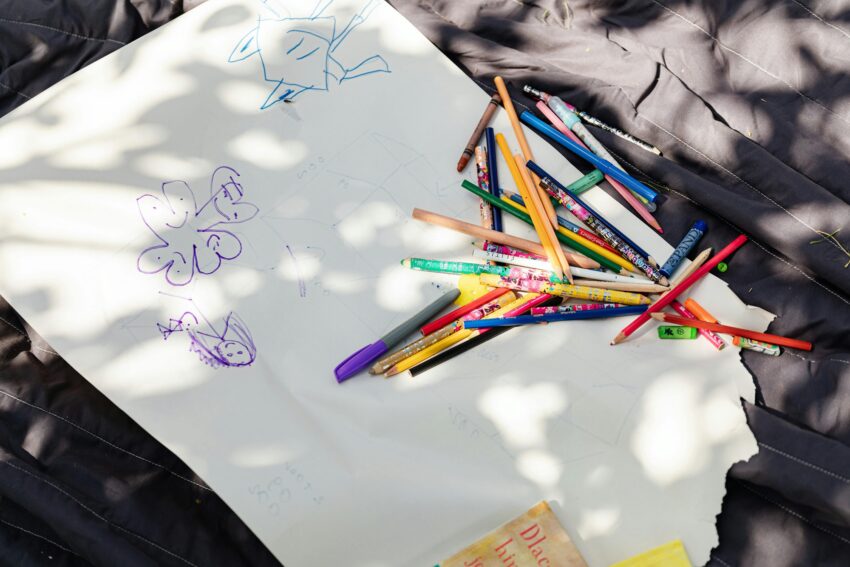
In a world overloaded with words—texts, emails, endless social media scrolls—drawing offers a quiet rebellion. It’s not about creating gallery-worthy masterpieces; it’s about spilling your inner chaos onto paper with a pencil or pen. This simple act transforms doodles into a powerful tool for self-expression and therapy, helping people process emotions they can’t always name. Whether you’re sketching a stormy sea to mirror your anxiety or outlining a blooming flower for hope, drawing bypasses the brain’s verbal filters and taps straight into the subconscious.
Artists and therapists alike have long recognized this magic. Psychologist Carl Jung sketched mandalas during his explorations of the psyche, using them to map his unconscious mind. Today, art therapy builds on that foundation, with studies from the American Art Therapy Association showing how drawing reduces stress hormones like cortisol by up to 30% in just 45 minutes. But you don’t need a therapist’s couch or an art degree to benefit. Anyone can pick up a sketchbook and start unpacking their thoughts. This article dives into why drawing works, how to harness it for emotional release, and real-world stories proving its transformative power.
The Science Behind the Sketch: Why Drawing Heals
Drawing engages the brain in unique ways that words alone can’t match. Neuroscientists explain it through “flow state,” a term coined by psychologist Mihaly Csikszentmihalyi. When you draw, your mind quiets the inner critic and enters a meditative zone. Brain scans from fMRI studies reveal heightened activity in the prefrontal cortex—responsible for focus and emotion regulation—while the amygdala, the fear center, calms down.
Consider expressive drawing, a technique where you let lines flow without judgment. Research from Drexel University found that cancer patients who drew their pain experienced a 20% drop in symptoms compared to those who only journaled. The act externalizes internal turmoil: jagged lines for anger, soft curves for sadness. This visual language communicates what therapy sessions might take hours to uncover.
Therapeutically, drawing builds resilience. A 2022 study in the Journal of Clinical Psychology showed that regular sketchers reported lower depression scores after eight weeks. It’s accessible—no expensive supplies needed—and inclusive, welcoming beginners who fear “I can’t draw.” The key? Perfection isn’t the goal; expression is.
Self-Expression Unleashed: From Doodles to Deep Insights
Self-expression through drawing starts small but scales to profound revelations. Imagine scribbling during a lunch break: a quick portrait of your mood captures fleeting frustration better than a rant to a friend. Over time, patterns emerge. Recurring motifs—like locked doors for feeling trapped—reveal subconscious themes ripe for reflection.
Professional illustrator and therapist Elena Martinez shares how drawing saved her during burnout. “I was drowning in deadlines,” she recalls. “One day, I drew a sinking ship with tiny figures bailing water. It forced me to see my overload visually.” Her sketches became a dialogue with herself, leading to boundaries she enforced at work. Stories like hers abound: veterans with PTSD use drawing to revisit trauma safely, turning nightmares into controlled narratives on paper.
For everyday folks, it’s equally potent. Parents sketch family chaos to find joy amid mess; students diagram exam stress to strategize relief. Drawing democratizes therapy, making vulnerability feel playful rather than painful.
Practical Techniques: Your Starter Toolkit for Therapeutic Drawing
Ready to try? No talent required—just intention. Begin with five minutes daily to build the habit. Stock a basic kit: sketchbook, pencils (HB for light lines, 2B for bold), eraser, and colored markers for emotion pops.
Here are four beginner-friendly techniques, each targeting different therapeutic angles:
- Emotion Mapping: Divide a page into quadrants labeled with feelings (joy, anger, calm, fear). Fill each with abstract shapes or symbols. A swirling vortex for anger? Swirling reds release tension. Review weekly to track mood shifts.
- Freeform Doodling: Set a timer for 10 minutes. Let your hand move without lifting the pencil. No planning—pure stream-of-consciousness. Afterward, title it or journal what surfaces. This mirrors automatic writing but visually.
- Mandala Creation: Draw a circle and fill it symmetrically with intuitive patterns. Jung called these “windows to the psyche.” Use it for anxiety; the repetition soothes like breathing exercises.
- Body Tracing: Outline your hand or foot, then embellish with words, symbols, or memories tied to sensations. Great for somatic therapy, connecting physical feelings to emotions.
Pro tip: Pair drawing with prompts like “What does my stress look like today?” Apps like Procreate or free tools like Krita digitize it for on-the-go access. Track progress in a “before and after” journal to witness growth.
Stories of Transformation: Real Lives, Real Drawings
Drawing’s impact shines brightest in personal triumphs. Take Sarah, a 35-year-old teacher from Chicago battling grief after losing her mother. Traditional talk therapy felt stalled until she tried “grief portraits.” Each week, she drew her mom’s face morphing—from sharp edges in pain to soft glows in acceptance. “It was like conversing with her spirit,” Sarah says. Six months later, her depression lifted; the sketches now hang as cherished memorials.
In corporate settings, companies like Google incorporate “sketch jams” for employee wellness. Engineer Raj Patel credits them for navigating imposter syndrome. “I drew myself as a tiny robot in a giant machine,” he laughs. “It humanized my fears, making them fixable.” His team’s morale soared, proving drawing’s ripple effect beyond individuals.
Even kids benefit. A UK school program had students draw “worry monsters” to externalize anxieties, slashing bullying reports by 40%. These stories underscore drawing’s universality—no age, background, or skill bars entry.
Overcoming Barriers: Common Hurdles and How to Jump Them
Not everyone dives in effortlessly. “I can’t draw” is the biggest block, but reframe it: this isn’t art class; it’s therapy. Start blindfolded to kill perfectionism—focus on feeling, not finesse.
Time scarcity? Micro-sessions work: 60 seconds of thumb-sketching your mood. Supplies overwhelm? Use napkins and borrowed pens. For deeper blocks, guided books like “The Artist’s Way” by Julia Cameron blend drawing with morning pages.
Critics might dismiss it as “not real therapy,” but evidence disagrees. The British Association of Art Therapists certifies professionals, yet self-guided drawing empowers autonomy. Combine it with mindfulness apps for amplified results.
The Bigger Picture: Drawing into Daily Life and Beyond
Integrating drawing fosters lasting change. Morning sketches set positive intentions; evening ones process the day. Share in online communities like Reddit’s r/ArtTherapy for accountability and inspiration—without judgment.
Long-term, it rewires habits. A year of consistent drawing boosts self-awareness, empathy, and creativity. Writers block-bust with visual brainstorming; entrepreneurs map ideas as mind maps. In relationships, couples draw “our story” to deepen bonds.
As society grapples with mental health crises—WHO reports 1 in 8 people facing disorders—drawing offers a free, proactive antidote. It’s not a cure-all, but a companion for the journey.
In essence, drawing invites you to author your inner world visually. Grab that pencil; your untold story awaits on the page. What will you create today?
The written content on this page was generated by perplexity.ai.