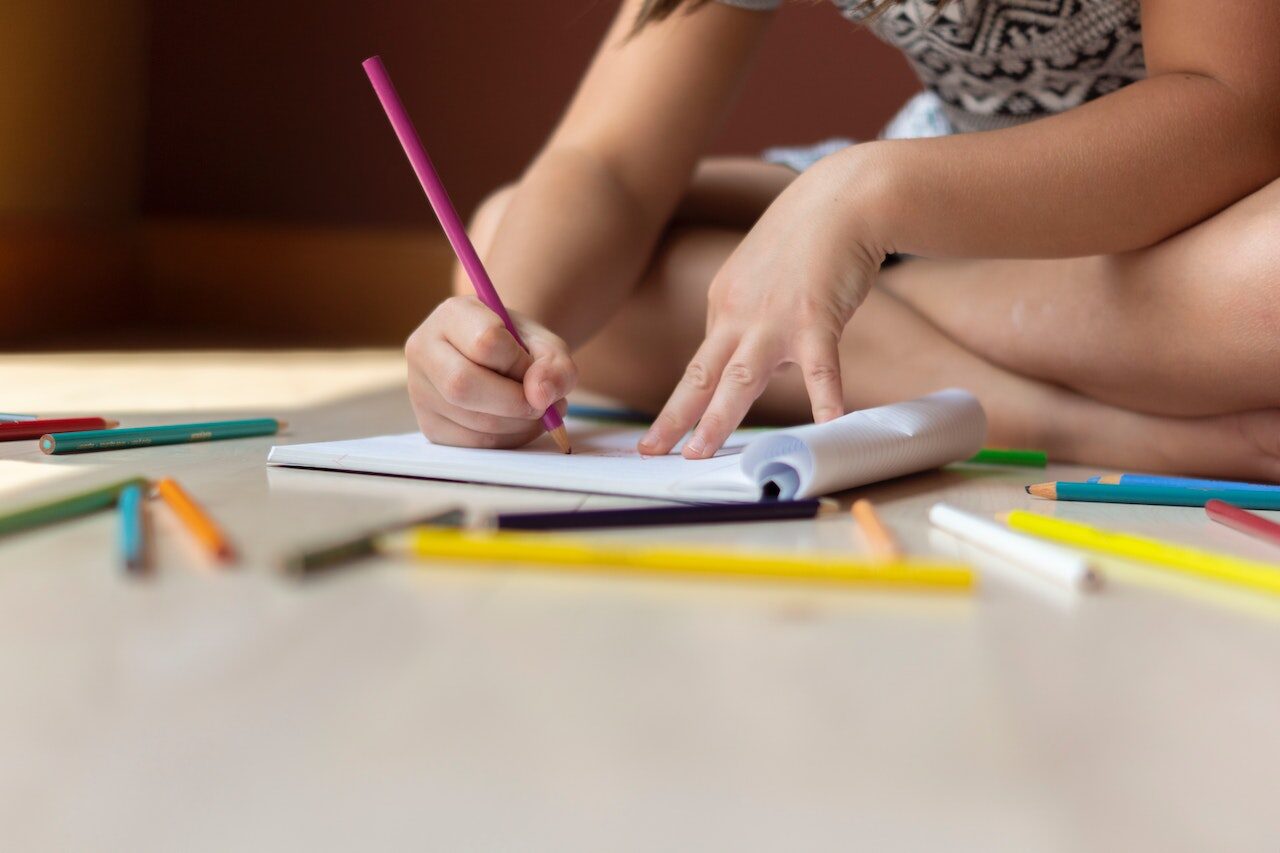
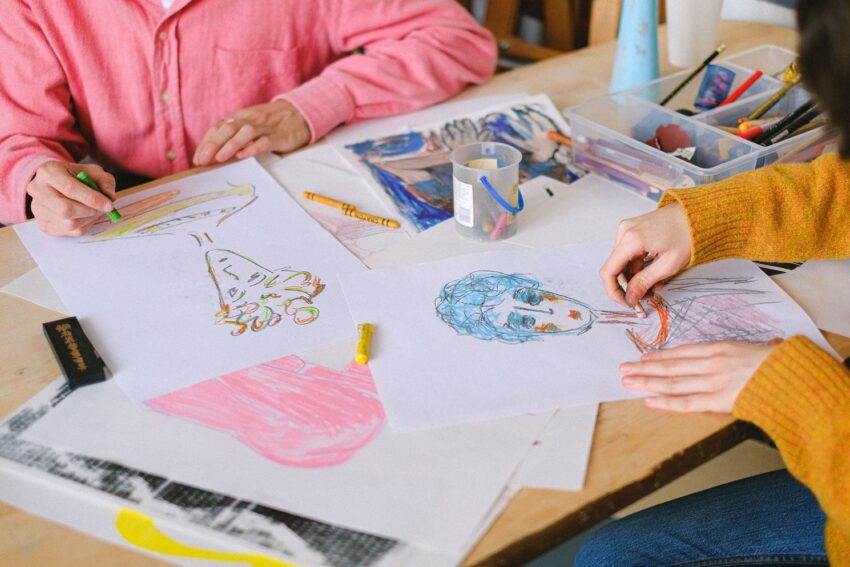
In an age where so much communication happens through screens, collaborative drawing offers a refreshing way to connect with others. Whether you’re sitting around a table with family, working with classmates, spending time with coworkers, or joining an online creative community, drawing together creates shared experiences that are both meaningful and enjoyable. You do not need to be an artist to participate. In fact, some of the most memorable collaborative art projects come from people who simply enjoy expressing themselves with lines, shapes, and colors.
Collaborative drawing is exactly what it sounds like: two or more people contributing to the same artwork. Each participant adds their own ideas, creating a final piece that reflects everyone’s imagination. Sometimes the result is beautifully organized, while other times it is delightfully chaotic. Either way, the process encourages creativity, communication, and laughter.
One of the greatest strengths of collaborative drawing is that it removes the pressure of creating something perfect. Instead of focusing on individual talent, participants concentrate on building something together. This shared responsibility often makes people feel more relaxed and willing to experiment. Mistakes become opportunities for new ideas, and unexpected additions often lead to the most interesting parts of the artwork.
For families, collaborative drawing can become a favorite bonding activity. Parents and children can gather around a large sheet of paper and create an imaginary world together. One person might draw a castle, another adds a dragon, while someone else fills the sky with colorful balloons or friendly aliens. The story grows naturally as each family member contributes something unique. Unlike many digital activities, collaborative drawing encourages face-to-face interaction and conversation throughout the creative process.
Teachers also recognize the educational value of collaborative drawing projects. In classrooms, students can work together to illustrate scenes from books, create historical timelines, design science posters, or build visual maps of new vocabulary words. These projects help learners practice teamwork while reinforcing academic concepts. Students who may struggle with written communication sometimes find it easier to express their understanding through illustrations, making collaborative drawing an inclusive learning tool.
Businesses and organizations are increasingly using collaborative drawing during workshops and team-building events. Employees may be asked to visualize company values, map customer experiences, or brainstorm new ideas through shared sketches. Drawing together encourages creative thinking because it bypasses the expectation of polished presentations. Instead, people quickly communicate concepts using simple images, arrows, symbols, and diagrams. This often leads to fresh discussions that might not happen during traditional meetings.
One classic collaborative drawing activity is the “pass-the-paper” game. Each participant starts a drawing and works on it for one or two minutes before passing it to the next person. The next artist continues the drawing without explanation, building upon what already exists. After several rounds, the papers return to their original creators, who often discover surprising transformations. A simple flower may have become an entire garden, while a tiny house may now sit on the back of a giant turtle sailing across the ocean.
Another entertaining project is creating a giant community mural. Participants divide responsibilities naturally while working toward a shared vision. Some focus on backgrounds, others on characters, landscapes, decorations, or lettering. Because everyone contributes according to their interests, the final artwork reflects a rich variety of artistic styles. Community murals are especially popular during festivals, school events, neighborhood celebrations, and charity activities because they give everyone an opportunity to leave their mark.
Collaborative storytelling through drawing offers another creative twist. One participant begins by drawing the opening scene of a story. The next person adds a new event, followed by another contributor introducing an unexpected character or challenge. As the artwork grows, so does the narrative. By the end, participants have created both a visual masterpiece and an original story filled with surprising adventures. This activity works particularly well with children because it develops both imagination and sequencing skills.
Blind collaborative drawing adds humor to the experience. In this version, participants either wear blindfolds or keep their eyes closed while following verbal instructions from teammates. The resulting drawings rarely resemble the original intentions, but the laughter generated during the activity becomes the real reward. Beyond entertainment, blind drawing strengthens listening skills and highlights the importance of clear communication.
Technology has also expanded opportunities for collaborative drawing. Online whiteboards, shared digital canvases, and drawing applications allow friends, families, and coworkers to create artwork together even when they live in different cities or countries. Real-time collaboration enables participants to watch each other’s ideas appear instantly on the screen, creating a sense of presence despite physical distance. Digital collaboration became especially popular during periods of remote learning and virtual work, but it continues to thrive because of its convenience.
Collaborative drawing can also support emotional well-being. Creating art alongside others encourages mindfulness by shifting attention away from daily stress and toward the present moment. Participants often become absorbed in the flow of adding colors, textures, and details. There is little pressure to produce professional results, making the experience relaxing rather than competitive. The conversations that naturally arise during collaborative art sessions also strengthen relationships and create positive memories.
For people who feel nervous about drawing, collaborative projects provide a welcoming environment. Since everyone contributes only a small portion of the artwork, individual imperfections become part of a larger creative whole. Many participants discover hidden confidence after realizing that their simple sketches help complete the group’s vision. This supportive atmosphere encourages continued artistic exploration without fear of criticism.
Schools often combine collaborative drawing with cultural celebrations. Students can create artwork inspired by festivals, local traditions, famous landmarks, or historical events. Each student contributes one section while learning about the broader theme. The finished display not only decorates the classroom but also demonstrates how individual efforts contribute to a meaningful collective achievement.
Environmental themes also work well for collaborative drawing projects. Participants can illustrate forests, oceans, wildlife habitats, or sustainable cities while discussing conservation and environmental responsibility. As each person adds plants, animals, renewable energy sources, or recycling ideas, the artwork becomes both educational and inspiring. These projects often encourage thoughtful conversations about protecting the planet.
Seasonal collaborative drawings provide year-round enjoyment. During autumn, participants might create a colorful forest filled with falling leaves. Winter projects can feature snowy villages, holiday decorations, or magical landscapes. Spring inspires blooming gardens and butterflies, while summer encourages beaches, parks, and outdoor adventures. Rotating themes throughout the year keeps collaborative drawing activities fresh and exciting.
Creative challenges add another layer of fun. Participants might agree to include certain objects somewhere in the drawing, such as a hidden cat, a rainbow, a clock, or a flying fish. Others may draw using only specific colors or geometric shapes. These playful limitations often stimulate even greater creativity by encouraging participants to think differently about ordinary ideas.
Collaborative drawing is equally valuable for intergenerational activities. Grandparents, parents, and children each bring different life experiences and artistic styles to the same project. Older participants may draw traditional scenes or favorite memories, while younger contributors introduce imaginative creatures and futuristic inventions. Together, these perspectives create artwork that celebrates both family history and future dreams.
Libraries, museums, and community centers frequently organize collaborative drawing events because they are affordable, accessible, and inclusive. Unlike activities requiring expensive equipment or specialized skills, collaborative drawing only needs basic materials such as paper, pencils, markers, or crayons. This low barrier to participation allows people from all backgrounds and ages to join comfortably.
Even simple daily routines can become opportunities for collaborative creativity. Families might keep a shared sketchbook on the kitchen table where anyone can add doodles throughout the week. Coworkers can maintain a collaborative whiteboard in the office break room for humorous drawings or motivational illustrations. Friends may exchange digital sketches during online conversations, gradually building a shared collection of artwork over time.
One overlooked benefit of collaborative drawing is how it encourages active observation. Participants naturally pay attention to one another’s ideas, adapting their own contributions to complement the growing artwork. This process develops flexibility, empathy, and creative problem-solving. Rather than insisting on individual visions, participants learn to appreciate unexpected directions introduced by others.
Collaborative drawing also demonstrates that creativity is not limited to professional artists. Every participant contributes something valuable, whether through detailed illustrations, playful doodles, imaginative concepts, or colorful decorations. The final artwork succeeds because of its diversity rather than its perfection. Each person’s unique perspective enriches the shared creation.
As society continues to search for meaningful ways to build stronger relationships, collaborative drawing stands out as a simple yet powerful activity. It combines imagination, communication, teamwork, and joy into one shared experience. Whether used for education, recreation, professional development, or family bonding, collaborative drawing reminds us that creativity grows when people create together.
The next time you gather with friends, classmates, colleagues, or loved ones, consider placing a large sheet of paper in the center of the table. Pick up a few markers, start with a single line, and invite everyone to add something. There are no strict rules, no artistic requirements, and no right or wrong answers. What begins as a few simple sketches may become an unforgettable work of art filled with laughter, conversation, and lasting memories. For couples, this simple activity can even become one of the Unique ideas for celebrating your anniversary, creating a meaningful keepsake while strengthening your connection. In the end, the greatest masterpiece is often not the drawing itself but the connections formed while creating it together.
The written content on this page was generated by perplexity.ai.