
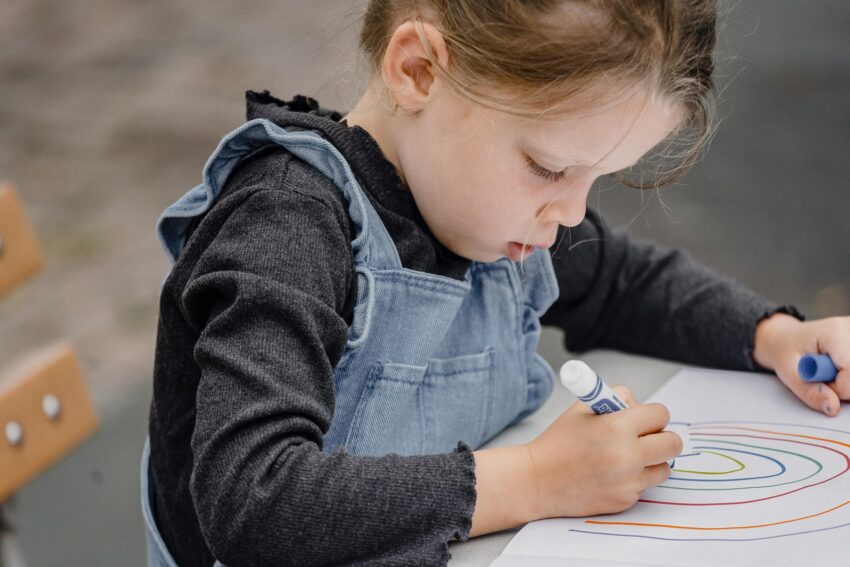
When kids first pick up a crayon, pencil, or marker, they aren’t thinking about fine art—they’re exploring, experimenting, and expressing themselves. One of the best ways to nurture their creativity is by teaching them how to use basic shapes as the building blocks of art. With just circles, squares, and triangles, children can create animals, houses, robots, flowers, and even entire scenes. What starts as a simple doodle can quickly grow into a masterpiece!
In this article, we’ll explore why shape drawing is so powerful for young learners, fun step-by-step ways to get started, and creative projects that turn simple geometry into imaginative art. Whether you’re a parent, teacher, or young artist, these tips will make drawing fun and confidence-boosting.
Why Start with Shapes?
Shapes are the foundation of drawing. Every complex picture—whether it’s a cartoon character, a car, or a castle—can be broken down into simpler parts. For kids, this makes drawing much less intimidating.
- Boosts Confidence: Children realize that drawing doesn’t have to be “perfect.” A circle isn’t just a circle—it can be a face, a sun, or a balloon.
- Improves Fine Motor Skills: Repeatedly drawing lines, curves, and angles strengthens hand muscles, preparing kids for both art and writing.
- Encourages Creativity: When kids see how a square can turn into a robot or a triangle into a rocket ship, they learn to imagine beyond the obvious.
- Builds Math Connections: Introducing shapes through art doubles as a playful introduction to geometry and spatial awareness.
In short, starting with shapes allows children to feel successful early, which makes them more excited to keep learning.
Circles: The Friendly Shape
The circle is often a child’s first favorite shape. Smooth, round, and familiar, circles can become nearly anything.
Fun Circle Art Ideas for Kids:
- Smiley Faces – Draw a circle, add two dots and a curved line—instant happiness!
- Animal Heads – Circles make perfect bases for cats, bears, and monkeys.
- Balloons – A few circles on strings become a cheerful party scene.
- Planets and Suns – Circles bring the solar system to life with colors and designs.
Step-by-Step Activity:
- Draw three big circles on paper.
- Ask your child: “What could these circles become?”
- Let them add eyes, ears, or patterns. One might turn into a pig, another into a pizza, and the third into a basketball.
This exercise helps kids understand that one shape can have endless possibilities.
Squares: The Strong Shape
Squares and rectangles are great for introducing structure. They teach balance, straight lines, and symmetry.
Fun Square Art Ideas for Kids:
- Houses – A square with a triangle roof and rectangle door becomes a cozy home.
- Robots – Stack squares and rectangles for a blocky, fun robot character.
- Gifts – A decorated square with a bow turns into a present.
- Buildings – Cities can be built entirely out of squares and rectangles.
Step-by-Step Activity:
- Draw one large square in the center of the paper.
- Ask: “What could we build from this square?”
- Add a triangle on top, and suddenly, you’ve got a house. Add windows, flowers, and pets for a whole scene.
With squares, kids learn that drawing isn’t about complexity—it’s about combining shapes to tell a story.
Triangles: The Pointy Shape
Triangles are fun because they can stand tall like mountains or point like arrows.
Fun Triangle Art Ideas for Kids:
- Mountains – Add a few triangles with snowy tops for a winter scene.
- Party Hats – A triangle with colorful patterns makes for festive fun.
- Trees – Stack green triangles for a pine tree.
- Pizza Slices – A triangle with circles (pepperoni) instantly becomes delicious art.
Step-by-Step Activity:
- Draw three triangles of different sizes.
- Ask your child: “Can these triangles become something fun?”
- A small one might be an ice cream cone, a medium one a roof, and a large one a mountain.
Triangles add variety and teach kids about angles, direction, and size.
Combining Shapes into Pictures
Here’s where the magic happens. Once kids understand circles, squares, and triangles, they can combine shapes to make more detailed drawings.
Examples:
- A Rocket Ship – A rectangle body, a triangle nose, and circle windows.
- A Cat – A circle head, oval body, triangle ears, and small circle paws.
- A Car – A rectangle base, a square cabin, and two circle wheels.
- A Castle – Stacked rectangles with triangle rooftops and circle windows.
Encouraging children to experiment with combinations helps them see art as a puzzle—one they can solve with imagination.
Fun Shape Drawing Games
Make drawing shapes playful! Here are a few games for classrooms, family nights, or solo fun:
- Shape Detective – Point to an object (like a clock or a door) and ask, “What shape do you see?” Then draw it.
- Shape Monster – Start with a circle body, add triangle teeth, and square feet. Let kids invent silly creatures.
- Shape Collage – Cut out paper circles, squares, and triangles. Let kids glue them into pictures.
- Shape Race – Give kids a time limit: “Draw five different animals using only circles in two minutes!”
Games not only improve skills but also keep art exciting.
Encouraging Creativity and Confidence
One of the biggest challenges for kids is the fear of “not drawing well enough.” That’s why shape-based art is perfect. It’s simple, achievable, and rewarding. Parents and teachers can boost confidence by:
- Celebrating effort, not perfection: Praise the attempt, not just the result.
- Asking open-ended questions: Instead of “What is that?” ask “Tell me about your drawing.”
- Joining in: Kids love when adults draw alongside them—it makes the process collaborative.
- Displaying artwork: Hanging a child’s art on the fridge or classroom wall shows their work has value.
Confidence in art often spills into other areas—problem-solving, writing, and even public speaking.
Moving from Shapes to Masterpieces
As children grow, they’ll naturally move from simple shapes to more detailed drawings. But the foundation remains the same. Even professional artists sketch with shapes first before adding details.
Here’s a progression you might notice in young learners:
- Simple Shapes – Circles, squares, and triangles drawn separately.
- Shape Combinations – Using multiple shapes to form objects like houses or animals.
- Adding Details – Faces, patterns, and backgrounds appear.
- Storytelling – Kids begin to connect drawings into scenes or narratives.
- Personal Style – Children experiment with colors, patterns, and unique ideas.
By starting with shapes, you’re giving kids the tools they need to create a lifetime of art.
Activities for Parents and Teachers
Here are some ready-to-use activities to try today:
Activity 1: Shape Animals
- Draw a circle head, square body, and triangle ears.
- Ask the child: “What animal could this be?”
- Let them add details and color.
Activity 2: Shape City
- Challenge kids to build an entire city using only squares and rectangles.
- Add circle windows, triangle rooftops, and colorful doors.
Activity 3: Shape Story Page
- Have children create a comic strip using shapes as characters.
- Example: A circle sun, a square house, and a triangle tree.
- Let them write a short story to go with it.
Activity 4: Mystery Shape Drawing
- Draw a random shape (like a triangle).
- Ask: “What could this become?”
- Watch as kids transform it into something surprising.
These activities don’t require fancy tools—just paper, pencils, crayons, and imagination.
Art for kids doesn’t have to be complicated. With just a circle, square, and triangle, young learners can build confidence, spark creativity, and discover the joy of self-expression. Shapes are the foundation of every masterpiece, and when kids see how their simple doodles can grow into animals, houses, or whole worlds, they begin to understand a powerful truth: art is for everyone.
So grab some crayons, sit down with your little artist, and start with a circle. Who knows? That circle might just be the beginning of a masterpiece.
The written content on this page was generated by perplexity.ai.